The Forgotten Bottom
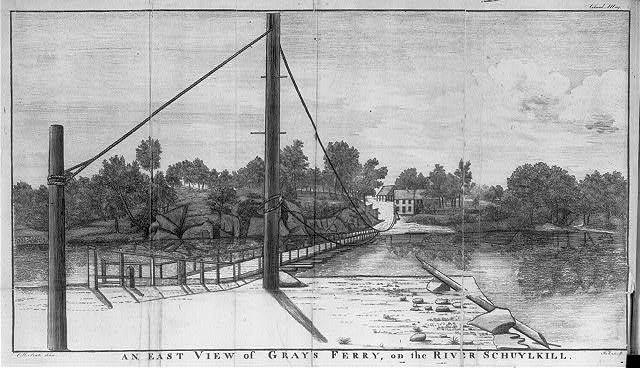
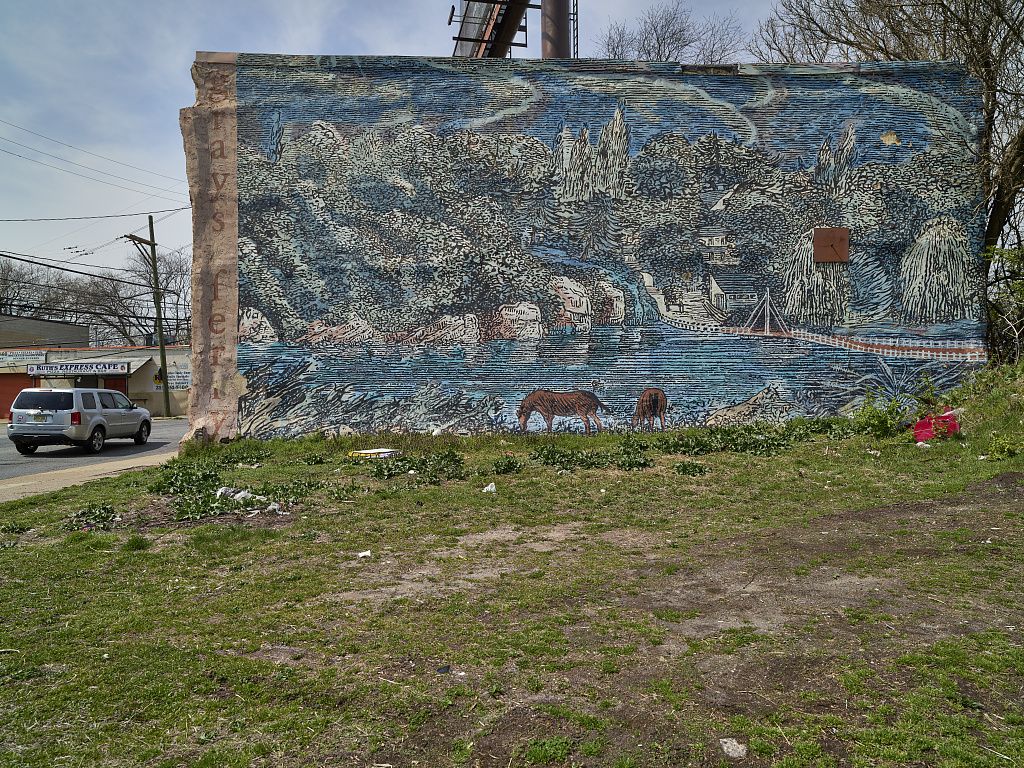
Grays Ferry sits along the Schuylkill River in South Philadelphia. The low-lying section near the water has been called "The Forgotten Bottom" for generations. The name captures both its geography and how the city has treated it.
It is a predominantly Black, working-class neighborhood. Families have lived here for generations. They raised children here, built community here, buried their dead here. They also got sick here at rates that should have triggered intervention decades ago.
The Refinery: 1866 – 2019
In 1866, the Atlantic Petroleum Storage Company was founded. It incorporated in 1870 as the Atlantic Refining Company and began refining petroleum on a tract of land adjacent to Grays Ferry. The facility eventually grew to approximately 1,300 acres, larger than all of Center City Philadelphia. It became the largest refinery on the East Coast. By 1891, 35 percent of all U.S. petroleum exports and 50 percent of the world's lighting fuel came out of the Point Breeze complex.
For over 150 years, the refinery operated next to people's homes, schools, and playgrounds. It changed hands over the decades (Atlantic Refining, then Arco, then Sunoco, then Philadelphia Energy Solutions (PES)) but it never stopped polluting.
According to city data, the refinery was Philadelphia's single largest stationary source of particulate pollution. Particulate matter (the tiny particles that damage lungs and cause respiratory disease) drifted over the neighborhood every single day.
The Explosion
On June 21, 2019, the PES refinery exploded. The blast released over 5,200 pounds of hydrofluoric acid into the air. Hydrofluoric acid is one of the most lethal industrial chemicals in existence. The explosions were caused by a corroded pipe elbow that had not been replaced. After more than a century of operation, the refinery finally shut down.
But the damage was already done. And it didn't stop with the closure.
The Environmental Integrity Project tested benzene levels at the refinery's fenceline in 2020, more than a year after closure. They found annual concentrations averaging 28.1 micrograms per cubic meter. The EPA action level is 9 micrograms per cubic meter. The PES site was more than three times over that threshold.
In 2019, the year of the explosion, benzene levels at the fenceline had averaged 49.1 micrograms per cubic meter, more than five times the federal action level. The Environmental Integrity Project ranked the site as the second-worst in the nation for benzene emissions.
The Health Data
The numbers tell a story that residents have lived for decades:
- A Philly Thrive community health survey of 314 respondents found more than one-third had asthma at some point in their lives. The national adult asthma rate is 7.7% (CDC, 2021).
- More than half of respondents reported asthma, heart disease, cancer, a respiratory condition, or some combination.
- Asthma hospitalization rates in the area are the highest in Philadelphia.
- Residents report elevated rates of leukemia, cancers, kidney disease, diabetes, and depression.
- Multiple generations of the same families develop the same respiratory conditions.
Dr. Michelle Rose, a CHOP pediatrician and neighborhood resident, was among 120 hospital employees who signed a petition opposing the garage and submitted it to CHOP administrators. At a September 2025 rally, she said: "We find it abhorrent that a children's hospital wants to build a giant garage that will bring 1,000 cars to the area that wouldn't even serve the community, that's just gonna make all that pollution even worse, trigger more asthma and create worse health outcomes for all the residents that live in the community."
A CHOP pediatrician warned that CHOP's own project would make children sicker.
Environmental Racism by the Numbers
Black Americans are 75% more likely than other Americans to live in fenceline neighborhoods, communities directly adjacent to industrial pollution sources.
Source: NAACP and Clean Air Task Force, "Fumes Across the Fence-Line," 2017
An EPA study found that people of color are exposed to higher levels of fine particulate pollution regardless of income level. Race, independently of income, drives air pollution exposure disparities in the United States.
For the better part of the 20th century, Grays Ferry was doubly harmed: by the draining of city resources away from the neighborhood, and by the siting of toxic industrial uses that drove up rates of asthma, cancer, and elevated blood lead levels in children.
The Residents
Sylvia Bennett, 78, has watched her neighbors die. She pointed at houses on her block and said: "They're dead, they're dead, they're dead. People died around here from this." Two of her three daughters had breast cancer. For one, chemotherapy caused nerve damage so severe she could no longer walk.
Debbie Robinson, a Grays Ferry resident of 22 years, developed restrictive lung disease, kidney disease, and asthma. She now requires an oxygen tank to breathe. She attributes her conditions to living barely a mile from the refinery.
Valerie Carr, 77, a lifelong resident and Democratic committeeperson, said simply: "We don't want it. We don't need it. It's a health hazard."
The Last Green Space
Before CHOP purchased it, the 3.4-acre lot at 3000 Grays Ferry Avenue was one of the neighborhood's last patches of open green space. In a community hemmed in by highways, industrial remnants, and dense rowhouses, this lot was where families went.
Residents walked their dogs there. Children played there. People could see the sunset from their windows. Neighbors kept the lot clean, maintaining it themselves because the space mattered to them. One resident described its "intangible value beyond the $24.75 million CHOP paid for it." Another could see the sunset from her daughter's bedroom, a view that would be replaced by a seven-story concrete wall.
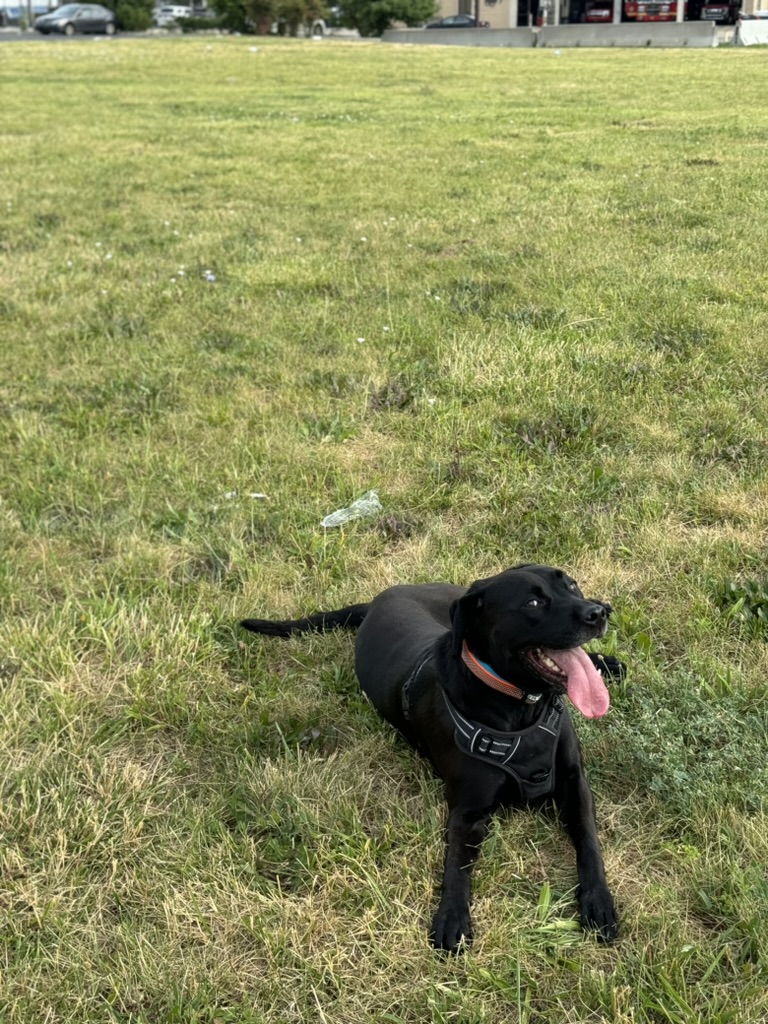
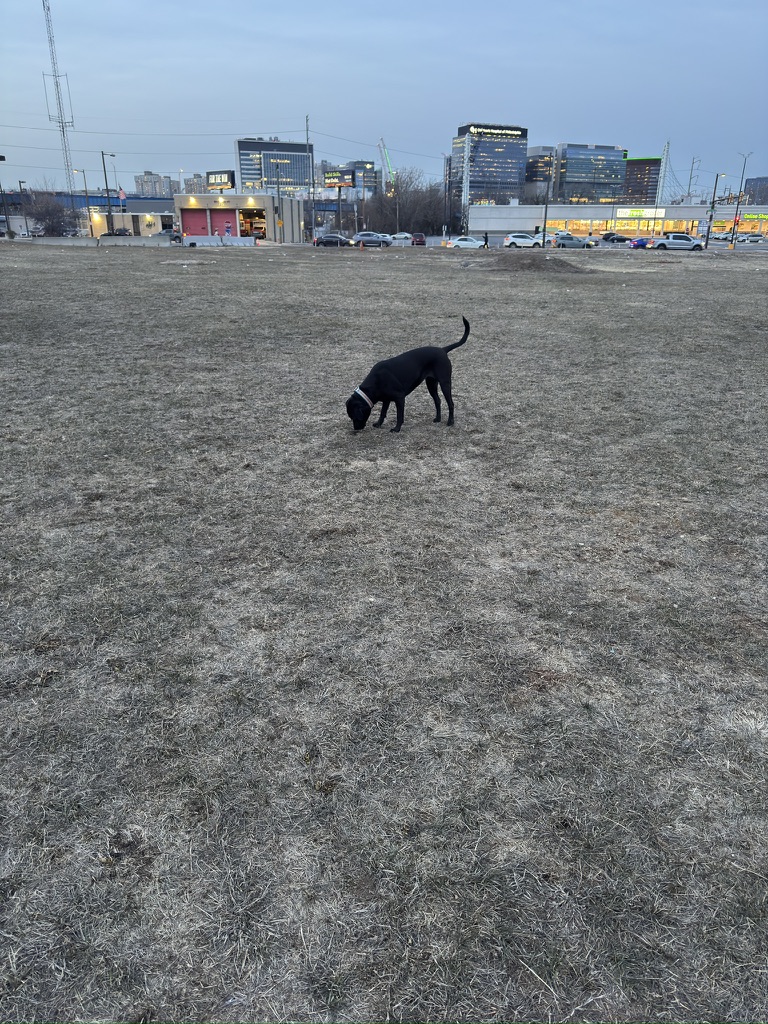
During the protests, community members held signs reading "Parks not Parking" and "Choose Health Over Profit." They proposed alternatives: a community garden, a dog park, an inexpensive grocery store, a restaurant with outdoor seating. Anything but a parking garage.
Directly next door, at 2900 Grays Ferry Avenue, sits the PAWS Grays Ferry clinic, a low-cost spay, neuter, and wellness facility that the community depends on. The Finnegan Recreation Center playground sits across the street, where children play basketball and swing on the swings.
On the night of April 8, after the garage collapsed, the city's Office of Emergency Management advised PAWS to evacuate due to increasing structural instability. Staff, volunteers, and firefighters worked through the night to transport dozens of dogs and cats to safety. All staff, volunteers, and animals were confirmed safe. The clinic is shut down indefinitely until the area is declared structurally sound. PAWS began offering pay-what-you-can adoptions at its Old City location to reduce overcrowding from the transferred animals.
The collapse didn't just kill three workers. It took away the community's last green space, shut down their animal clinic, and closed the streets around their playground.
And Then Came CHOP
Into this neighborhood, one poisoned by industry for over a century, where children have asthma at rates far exceeding the national average, where residents watch each other die of cancers they believe were preventable, the Children's Hospital of Philadelphia decided to build a 1,005-car parking garage.
They didn't build a clinic, a community health center, or the pediatric services that residents asked for. They built a seven-story parking structure for hospital employees who would be shuttled in from a mile away.
A children's hospital chose to increase car traffic and exhaust in a neighborhood where children can't breathe.
"CHOP is an illustrious institution that brings in millions of dollars of economic activity for the City of Philadelphia, but that doesn't give it the right to push around a neighborhood."
Kamau Louis, Graduate Student in City Planning, University of Pennsylvania
What the Collapse Took
The collapse didn't just kill three workers. It shut down a piece of the neighborhood.
The Fresh Grocer on Grays Ferry Avenue, directly adjacent to the construction site, remains closed because of the demolition. It is the only full-service supermarket in the immediate area. One resident told 6abc: "That's the only grocery store that we have around here, so it affected us a lot." Others pointed out that without a car, the nearest alternative is a 10-block walk.
A power pole near the site was damaged and had to be de-energized. Commercial parking was lost. Businesses closed. At her press conference on April 13, Mayor Parker acknowledged the disruption directly: "This tragedy has caused significant disruption here in Grays Ferry, including business closures and other neighborhood concerns."
On Sunday, April 12, the city organized a food giveaway at D. Finnegan Playground (1231 S. 30th Street). Dozens of residents lined up for food, diapers, and other essentials. Council President Kenyatta Johnson, who attended, said: "The neighborhood and our city right now they're dealing with the trauma of the tragedy that took place so whatever we can do to add to the level of healing that's what today is about."
Deputy Managing Director Don Morales said the goal is to "shrink this back into the original footprint as quickly as we can, to frankly give back the commercial space here, the parking space, get the businesses back." But there is no timeline.
Air quality testing during the demolition showed "no red flags," according to Morales, and results are being posted on the Department of Public Health's website. The city says its safety perimeters held and there was no community health impact from the demolition itself.
But that framing misses the point. This is a neighborhood that was already fighting air quality problems from decades of refinery operations. The grocery store was already the only one. The traffic was already dangerous. The community told CHOP, told the city, told the Civic Design Review committee that this project would hurt them. Every piece of public testimony at CDR opposed the garage. It was built anyway. And now the neighborhood is dealing with the fallout of a construction project it never asked for, on top of the grief of three men who will never come home.
The Street Reopens
On Tuesday, April 14, six days after the collapse, Grays Ferry Avenue partially reopened. The stretch between Washington Avenue and 29th Street is accessible again. Pedestrians and vehicles can now reach the Grays Ferry Shopping Center through the 29th Street entrance.
Closures remain in place up to 34th Street. CBS Philadelphia's Kim Hudson documented the road closures the morning after the collapse.
The Fresh Grocer reopened at noon the same day. It is the only full-service supermarket in the immediate area and it had been closed since the collapse. The Philadelphia Office of Emergency Management asked customers to call ahead because some businesses may have modified hours as they come back online.
The shopping center reopening matters. It was one concrete thing the neighborhood lost in the collapse, and it is one concrete thing that came back. But the street is not fully open. Cleanup continues. The site itself is still an active area with hazards present, according to Deputy Managing Director Don Morales.